Exactly How To Validate Study Peptide Pureness: Coa & Hplc Lab Overview
Peptide Testing: Hplc & Mass Specification Purity Guide Apex The primary approaches for measuring peptide purity are High-Performance Fluid Chromatography (HPLC) and Mass Spectrometry (MS). HPLC separates the target peptide from pollutants, evaluating purity. MS confirms the peptide's identification by determining its precise mass. These two strategies supply corresponding info and are the gold standard in the peptide market. Peptide pureness suggests the portion of the target peptide series in an example compared to impurities. It's essential because pollutants can skew research study results, influence drug safety, and concession speculative reproducibility, making high pureness crucial for precise scientific research. Notably, this pureness figure is generally determined after purification (e.g. by HPLC) and concentrates on peptide contaminations-- it does not count residual water, salts, or counter-ions in the dried peptide powder. In other words, the purity percent has to do with the make-up of peptide varieties in the sample, not the weight payment of water or salts. If you've ever before gotten a synthetic peptide for a laboratory experiment, you've likely saw a purity percent on the certification of evaluation-- usually values like 95%, 98%, or even 99%. Peptide pureness is an important quality metric that informs you what portion of a peptide sample is the designated item versus undesirable by-products. In easy terms, a peptide detailed as 95% pure is composed primarily of the target peptide (95%), with the staying ~ 5% composed of impurities. These pollutants can consist of points like shortened or abbreviated series, deletion versions, oxidized residues, or Direct SARMs supplements various other small side-products from the synthesis procedure. The pureness is then quantified as the percent of the major height area versus complete locations, giving a specific action of exactly how pure the peptide is [2] Matching HPLC, research laboratories make use of Mass Spectrometry (often paired as LC-MS) to validate the peptide's molecular weight and series identification. Mass spectrometry provides molecular confirmation by identifying the exact mass of the peptide and any type of co-eluting varieties or trimmed sequences with high precision. With each other, HPLC and MS information permit analysts to validate that the peptide's make-up matches what it must be (proper amino acid series and anticipated modifications) and that no substantial contaminants exist. Laboratory recognition of peptides is not just a scientific ideal method-- it's frequently a governing need when peptides are utilized in healing development or professional research. FDA and the European EMA have established guidelines mandating complete evaluation and quality control for peptide items to guarantee safety and effectivenessr.
What Paperwork Do I Receive?
Is 95% pureness good for peptides?
Peptides with an 85% pureness degree or greater are normally made use of in enzyme assays or biological task research studies. Peptides with purity more than 95% are excellent for quantitative evaluation.
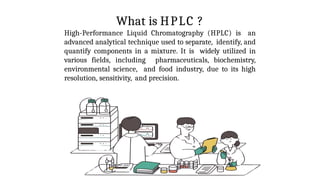
What Logical Techniques Were Made Use Of?
Its area about total peak location establishes the reported pureness portion. A peptide missing out on one amino acid might appear 99% pure on HPLC due to the fact that the trimmed variation is still the leading types. This is why HPLC alone isn't enough for full verification. Smaller sized tops indicate contaminations, which may include truncated series, deletion sequences, or deterioration products.- Kai is the laboratory's AI research study aide-- powered by Claude (Anthropic) and GPT (OpenAI)-- responsible for technical writing, literary works testimonial, COA verification, and compound analysis.
- The examination outcome is generally delivered as a binary detected or otherwise spotted, however a legitimate tester needs to also be able to create metal-by-metal measurable detail upon demand.
- A high-grade chromatogram has a solitary, symmetrical major peak with a level standard on either side.
- By using external labs for confirmation, vendors remove bias and maintain scientific integrity.
- Peptide testing is powerful, but researchers need to check out the range of each method meticulously.
